Wednesday, May 19, 2010

Non Petrol Culture


Have you ever done an Amish person? They are so much the best, so healthy, back in the day I met a girl who was in the middle of her rumshpringa, it was a time I'll never forget.  She was all about no time like the present!

I remember we would sit up on the crest of this hill that overlooked her six hundred acre farm, drinking cheap beer and having sex in the back seat of my car. She was seventeen and I had just turned eighteen. 

The strange thing was that normally Amish people dress with humility in mind, but because she was doing the rumshpringa, she would buy the craziest loud clothing from Kmart.  She worked out at a Burger King on the interstate during this time of run around.

I would leave and she would walk down this winding road to the families big white clapboard farm house, it had a great front porch on it, I never even thought about going down there with her or even asking to meet her family.

I stopped by their farm when I was in my late 30's to buy a pie, I walked right up onto that great porch, memories bubbling, the place had not changed a bit, I yelled "anybody home" and the screen door swung open and this young girl runs out, wearing a white bonnet and blue romper, she was barefoot, maybe 15 years old, and she looked just like i remembered her mom looking. She took my breath away, I said to her, "you have a beautiful farm", and she looked at me and smiled and "We do, we like it".

I was tempted to ask to talk with her mom, but figured I had gone back into the time tunnel far enough for that day, took my pie and got the heck out of there.

As I turned to walk away, I could have sworn I saw her mom in the window, but who knows, they never use curtains, so it could have been anyone.

I enjoyed every bite of that pie, strange how reality is ok that way.  Petrol culture won't leave you with any memories at all.

Submitted by Carl Cimini

Sunday, May 2, 2010

Farm Truck

JPhoto

Grandpap collected old trucks. He bought or traded just about anything. Pickers knew he had old, rusty vintage relics parked on the farm. Rich kids bought old Chevy panels, or Ford pickups to have restored that they drove off to college. 
The 300 acre farm sat back on a dirt road after the blacktop ran out near Saratoga Springs, New York. I would spend my summers with him and my grandmother. He taught life. He’d say if the nation ever got shut down for one reason or another, he would keep going. Ir was a real place where work never stopped except at bedtime. 
Farm animals, crops, equipment and fences were daily chores. Trading led to collecting, a thread that bound this hamlet community of self-sustaining farmers.  Neighbors pay one another with an old oak farm table, or in well used and darkened  empty French oak wine barrels, or an old ’48 Ford truck. 
My job was to fix the things that he had no time for. Engine repair, furniture rebuilding, fence stringing, and hay stacking were my assignments. The pickers would often come by buying up what we had around. I would fix up the wooden pieces in the barn using shop tools under grandpap’s eye, and the buyers from New York City hauled them back occasionally with an old truck in tow, too. 
Surplus produce was packed and sold to gourmet private chefs cooking for Wall Street tycoons and owner’s of expensive restaurants with pricey wine lists, and white pressed linen tableclothes. The hamlet evolved into an underground cooperative economy, while the junk buyers became food vendors for the farm kitchen bakers of breads, pies, cakes, cheeses, goat milk, beef, lamp, eggs, and more. 
Grandpap bred this farm collective and those who has struggled now prospered. Word spread among strangers who arrived offered to sell their dusty, barn stored discards. I would repair them, which found their way into Manhattan antique shops. This was real. This all had meaning. People helping people. My suburban school life meant less and less. I desired to remain and enroll in the nearby rural high school upon parent approval.  Ninth grade would be a trial run. To live with grandpap and grandma instead of home ran over me like mineral water from a soothing hot springs pool. The farm life of my mother reached into me as it did her. The community’s embrace penetrated deep like blood and veins acting together to feed the heart, and from there, all the organs and cavities reaching into the body’s core. What existed there was unique; antithetical to suburbia. 
To know when something is real is not to be forsaken, or ignored, or dismissed. When it comes to you, at any age, take it in. Hold it tightly with a comforting embrace. 
Living on a cul-de-sac, surrounded by too many similar, although unfamiliar, cul-de-sacs where people rushed everywhere and believing they needed to do so, otherwise precious valuable time, a commodity to many, would be unnecessarily wasted. I had seen both sides at the time. There was a difference. I knew it then, and know it now. 
There I felt and  touched something real. Its smells were real, too. The eyes of a cow, the blades of a bird’s feather, the warmth of an egg, the smell of fresh cut green hay, the taste of new milk. It had meaning. Nothing wasted. Time sacred; never hurried. One could look longer than a gaze, and see without distraction, and watch with clarity, and believe with 
understanding. 
There are many worlds. We can move from one into another. They are all a part of one, but inside there are smaller systems. In that place just outside of Saratoga Springs was a very small world, with individual moons rotating around it maintaining a rotational harmony solid and intact. The world back home was one that felt out of sync, and lacked harmony outside the front door of our home. There was a media pulse driving it forcing it off course and into multiple directions. But, on the farm one felt the anchoring of gravity holding us upon the earth with every step and every breath. (Max. word count 700.)

Friday, April 2, 2010

Salmon Lodge

JPhoto

A Bell Telephone phone booth stood on the corner of Routes 1 and 193. It was most often used by teenagers calling their pubescent sweethearts in hopes to attain some privacy from their cramped lives. Also, calls were made by some senior citizens living on a modest pension benefit left by a deceased spouse, along with Social Security checks, who did not have telephones in their tiny apartments. 
Mrs. Bastone would often walk on Sundays after attending St. Michaels services, and if the air was warm enough, she would stop by the phone booth and call her younger  sister, Theresa, who lived around 35 miles south on a pig farm of some 150 acres that her husband had grown up on.

There were times, she would not cross the Route 1 bridge heading south  because of a fear she had of them; a restricting trait since she was a teenager when a boy of limited social graces pretended to throw her over a small one raising her up against the railing as they were crossing Crooked Creek. She screamed slapping him across his long, tender, smooth face while issuing a reminder never put a hand on her body ever again. To drive across was easier because the covering of the eyes was a reasonable accommodation to soothe this phobia. 
She had devised a  solution to quiet her inner fear allowing herself to cross the bridge with cautious success. It was an ingenious plan to get back home, by foot,  otherwise the distance would be, at least, double as highway 193 west looped away from Beener Creek saving those afraid to cross bridges by foot from having to do so.
With the use of a tube of epoxy and one of hardener, which Mrs. Bastone was very familiar with, since she repaired broken chinaware for those that cared, affixed a  St. Christopher medal to the back side of the decorative Gothic embossed Rococo style abstract embedded into the cast iron post cap on the end of the dingy white painted railing lining the sidewalk along the bridge. The cap stood upon the tall end post just a few inches above the height of her head forcing her to raise her arms to eye level in order to take the kiss from her lips to finger tips and then, onto the medal. This symbolic action transferred her fear of crossing the bridge onto the medal allowing her to do so with a sense of security. 
As she crossed the Beener Creek bridge in her flat black church shoes wearing the lovely beige cashmere sweater Theresa bought her on the day she turned 70, which she often used as a jacket on such days, Mrs. Bastone began to think how in just a few years from now so much in and around this town will change. What brought all this to mind was how the Salmon Lodge on the corner of the bridge, which was filled with pictures of local fisherman, nets hanging from the ceiling, high-backed wooden booths with dark brown vinyl seat  covers,  stood next to the phone booth that often rang during the night with callers looking to connect with a familiar voice, was a gathering place for couples to go on Saturday night, for a few hours, just before the Second War broke, and even after those that came home did, to order delicious salmon cakes caught during spawning season right about this time of year. And now, the Salmon Lodge, a place that thrived for so long with memories so vivid in her mind today, has become a decaying relic of the town’s past.  (Maximum word count 650)

Sunday, March 21, 2010

A Moment Of Lost Time

Robb Hill Photo, Robb Hill
(Photo used in the NPR.Org/3 Minute Fiction Contest, which this author entered.)

He sat at the small table by the window leafing through the local paper. He had just come from the gym where he goes to be around people without having to interact. In pre-school they call it parallel play. He walks on the treadmill watching the television. The treadmill is good for those wanting solitude, while being around others. It lasts an hour to do his 4 miles. His doctor said to get some weight off otherwise he would be at-risk.

He laughed to himself when his doctor said that. He has always been “at-risk”. Joni Mitchell once wrote that she lived in a box of paints. He does, too. Not only in a box of paints, but in his apartment, in his work, at the gym, and in his mind.

When he wants to prolong his walk from the gym to his apartment, he stops at this coffee shop and sits by the window. He buys a latte, with skim and no whip, smiles at the clerk, engages in some ‘hello’ small talk, and drops 30 cents in the tip jar. He picks a secluded seat by the large plate-glass watching from the inside out.

He feels safe and secure in this neighborhood. It is home.

The street is darkening now. The lampposts are coming on. Some storefronts have lit signs reflecting and soaking up the dimming darkness of dusk.

Winter’s night comes earlier than he would like, but today the air reached 50 degrees, so he wore his spring jacket with his baseball cap. Spring is like a sweet kiss. You can dream about it, yet when it comes, your body savors every ounce of its affection.

He stares out the glass into a scene framed by his visual cortex, and draws it into his unconscious. From that sensation he takes a deep, and sighing breath and thinks about his loneliness. This part-time haunting awareness creeps in and around his routines without warning. He accepts it. Understands it. Does not fear it. Inspiration mined. And paintings evolve through translation. He is reminded of an aloof cat that keeps its distance, comes close, sits, purrs yet still brings comfort with its presence. His loneliness has a beating heart, as does the cat. You wish for the pet to curl up on your lap so the two of you can have an intimate moment, a shared moment of contact, but it rarely happens. But when it does, you realize just why you love her.

Loneliness can offer an understanding of the meaning of intimacy. Without the one, you cannot have the other. They fill each leg of the pants.

He drinks his latte while leafing through the paper then stops on the page where the obituaries and notices are printed. He has always been a reader of these personally public pages. He finds solace in the search for anyone whose family has offered a death or divorce notice, or for that matter, a missing person’s posting.

He stops and reads one for a second time. His heart beats faster, and senses a rush of reverberating anxiety. It is of an elderly woman he once knew. She was younger then when he last saw her 20 years ago, during the time he romanced her daughter for several months from spring throughout that winter.

He stops. Sits quietly for a while remembering missed days from his past, brought instantaneously up from memories stored quietly away.

He slowly, and with deliberate purpose rises from the wooden chair, discards the emptied cup, and walks home in thought remembering a missed chance at love. (600 words.)


*******************

Funny How Fate Works
by Elliott D.  

“Teacher may have saved lives.”  That’s what the headline read.  Left the paper spread eagled on a little red table in the Laundromat just like I found it.  This nutcase didn’t get tenure, so she fired on her coworkers and Lisa would have been one of her victims.  Lisa Schicksal.  Couldn’t believe it when I saw her picture.  Not that I really recognized her after all these years.  Luckily, the gun misfired.  My Lisa is a teacher and some kind of hero.

How long has it been? I wondered as I heaved my Dad’s old World War II army duffel bag containing laundry over my left shoulder.  How many times did I relive that night we spent together?  She was my college sweetheart, although I never told her that.  Don’t get me wrong, I wanted to but ….  Somehow, I never could do it.  I guess I placed her on a pedestal so high that I didn’t know how to reach her.

Seems like these sorts of things bunch together.  I mean, what’s with people nowadays?  Do they ever think about the consequences of their actions?  A guy flies a piper cub into an office building ‘cause he’s mad at the IRS.  Someone starts shooting in a Denver area school parking lot ‘cause who knows why.  The paper said Lisa heard the gun click as this professor tried to fire it at her.  Then, Lisa shoved her out of the room, and they barricaded the door with a wooden desk.

Funny how fate works.  I never frequented a Laundromat before, at least not since college days.  Two weeks ago, my divorce with Karen became official.  I’m lucky I have a bed to sleep on in the new place, let alone a washer and dryer.  There are a few other priorities, like dishes and silverware.  My 21 year-old daughter doesn’t seem to mind going out to eat, though.

The wind picked up as I stepped outside.  I donned my Rock ‘n’ Roll Hall of Fame & Museum cap.  At least it won’t be snowing for another couple of months, I sighed, shifting the weight of the army green bag.

What if I called her?  I mean, I’m divorced now.  Maybe there’s a reason that paper was open to that page.  Maybe there’s a reason she appeared out of nowhere.  Shards of memories sliced through my thoughts and lay scattered across the floorboards of my mind, sparkling like little jewels.  Listening to Lisa’s favorite Bob Dylan records after class, lying on the brown corduroy couch.  Bobbing up and down with the gentle waves in a canoe on Lake Mendota behind the Memorial Union at the University of Wisconsin, the sun splashing across Lisa’s upturned face.

Now, what could I say?  Oh, yeah, I know, it’s been a while.  Okay, maybe more than a while.  “I uh … you know what I really wanted to tell you, Lisa, I wanted to find out how you were doin’ after all this time … I was thinkin’ ….”  Well, she might laugh or hang up.

All right, maybe I’ll tell her how I’m trying to sort things out, make the puzzle pieces of my life fit.  Except I’ve got pieces from more than one puzzle mixed together.  “Lisa, I was thinking about us … even when I was with Karen.”  No, I shook my head, that doesn’t sound right, sounds like a stalker.  “Well, Lisa, did you ever wonder what it might’ve been like?  I mean, if you and I had … y’know?”   (600 word limit.)   


Tuesday, March 16, 2010

CLASS PICTURE

JPhoto


Those were the days my friends when we were called the Gang of Eleven. Eleven street boys from deep in the bowels of Chicago’s north side. City boys, rough-necks, street dogs. We were called all those names. We didn’t care. Lakeview, Wrigleyville, Addison street were our haunts. Infamous Clark street was filled with hippies, flower children, beaded girls with long dresses, bell bottomed jeans, and long, long hair. Stores had 
incense smells, like sandalwood, frankincense and myrrh wafting in the air as my friends and I walked down the street taking it in as if it were a historical event. An East Indian restaurant used strong curry spices filling my nostrils with these powerful, yet delicate odors.
The sidewalks were shared with older, drunken Vietnam Vets living on the street, sometimes mumbling into their grimy shirt collars, sleeping in secluded doorways on newspapers and flattened boxes, wrapped in their green army jackets with their name patches giving them identity when passersby eyes look the other way, covered in a filthy tossed off surplus sleeping bags unable to return to normal after time spent killing during a rainy season’s surprise ambush by Viet Cong underground cave dwelling soldiers, smoking opium, and eventually, passing into a point of no return. 
These older kids sat on street corners passing joints, playing music, drumming, singing and dancing like Native American Indians around a ceremonial campfire waving their arms up in the air, while swaying back and forth as if they were under the spell of a witch doctor or shaman. 
We were in Mr. D’s class all day because the principal didn’t want us moving from class-to-class, since he said we were “too disruptive”, and the teachers “would lose control of the room when we were in there.” School was cool. It was better than being on the street all day. We did learn. We all were good readers, and as a class, would write stream of consciousness collective stories taking turns creating crazy sentences. 
He made us each stand up at the knife scarred and use-warn ancient blackboard with the thick oak tray filled with yellow, pink, red, blue, green and white chalk and write our own sentence using the color of our choice, and then read it aloud facing our classmates with the same pride as delivering the State of the Union address. We did this more than once a week with the same excitement as when we would get an A on our spelling test. 
Mr. D would take us outside as often as he could. A large grassy field with trees lining the boundary was behind the school. We played softball in every type of weather. We all were Cubs fans. In the summer, I would ride my bike over to the ball park and listen to Jack Brickhouse call the games. On May 12, 1970, I cut school, and rode my bike to the ball park, and sat on the North Clark street curb, close to home plate, when I heard the crowd explode with joy after Ernie Banks hit his legendary 500 home run. “Jarvis winds away. That’s a fly ball, deep to left. Back, back, hey, hey, he did it! Ernie Banks got number 500!” 
That moment remains as vivid in my mind as the day Mr. D had us celebrate a few days later, when the sky turned bright blue, and air was summer warm, out behind the school, we partied. Tony put his whole face in the cream pie. We came together as brothers, enjoying our bond, as Mr. D snapped a picture. 

by, J

(Entries must be 600 words or less.)

Saturday, March 13, 2010

SIGNS OF THAW

JPhoto

A drive in the country was a hobby my father loved to do most anytime he had the chance. Working in an office, leafing through legal books, studying case law made him feel caged in like a zoo animal that was exhibiting nervous stress knowing that life had its boundaries and there was no escaping it. So, to unwind and relax he would get in his weekend play toy-a 1967 canary yellow Camaro S.S convertible with double wide black racing stripes emblazoned upon the hood and trunk. The tires were beefy mounted on shiny dished chrome wheels. This was his wild thing. There was nothing tame about it. He loved the deep, haunting growl that the engine forced out through the straight piped dual exhaust when we pulled away from our red brick ranch with attached sunporch framed in jalousie windows separating the house from the two car garage. My sister would willingly stay home with mom watching cartoons dressed in her white flannel pajamas and furry pink slippers cozied up in that glassed room with its plush tan wall-the-wall carpet.
His weekend car made him feel free. Dad could put the week’s stress all behind him as he settled into the black bucket driver’s seat trimmed in shiny chrome piping. I loved to ride with him. 
He would wake up early on Saturday, pull out the road atlas from the bookshelf in the family room where a set of World Book Encyclopedias were displayed with pride, and choose a route that would take a few hours to cover. 
We had a subscription to National Geographic and the entire family would take turns reading then dreaming of the the vividly documented adventures. On Saturday dad would live his own, and I would ride along. He was the camel driver taking us through the landscape of our version of an exotic far-away place.
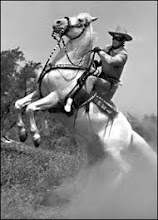
He thoughtfully marked the map with a freshly sharpened number 4HB red pencil and I would be his navigator. My job made me feel important like Tonto must have quietly realized as he showed the way to the Lone Ranger as they rode through canyon mountain passes.  His joy was to get into the countryside as quickly as possible, while I directed him along the rural two-lanes. 
We lived in a large town in eastern West Virginia. Country people called it a city, although it never got that close. The towns and hamlets on our route were filled with coal miners and loggers. Some roads were still hard packed dirt, which reminded us of another time when horses pulled farm wagons to town, to the granary, or the auction barn. The kids dressed like their working class parents and appeared older than they actually were. The boys wore ball caps with the company logo sewn on the front, faded and collar worn flannel shirts, and, if lucky, a Sears hood parka rimmed in fake fur for those cold days that required more. For some, televisions were only for “rich folks” which meant the kids spent time together, outside, experiencing their own brand of wild.
Jilly’s General Store, and gas station, Milton’s Pharmacy, Blazer and Sons Work Wear, Happy Foods grocery, and others like them sustained communities making them whole and grounded offering a home for those who wanted to stay or too afraid to leave. 
Dad would find a soda fountain store on a ‘Main Street’ and park. He would go inside, telling me to watch the car, and buy us a couple bottles of Cream Soda, or Old Fashioned Root Beer, along with hot dogs with all the fixings resting on a square of waxed paper lining  a red and white checked cardboard boat. We would sit in the car, the top down even if it was a chilly early spring day eating our lunch.
A gathering of kids, often riding bikes heading somewhere, maybe to the local river or stream to watch the thick muddied rushing, rising flood of white-capped waters as the snow melts, from intermittently warm sunny days, creating a torrent of sound; or off to play baseball for the first time after the long frozen winter, which stuck around longer than most desired, begins to show signs of thaw.
I remember biting into my hot dog when I saw two boys, only a few feet away, on their way to somewhere, stop like I would do soaking up the brilliantly colored exotic images in the National Geographic magazine, watching me in that same dreamy way with soft grins possibly wanting a chance at my little adventure, too.

By J 
(Offerings must have less than 780 word count.)